Vegan Foods That Are Rich in Potassium
A factual, source-backed guide to the best plant-based potassium sources — from leafy greens and legumes to fruits, grains, and seeds.
Potassium is a mineral and electrolyte that the human body cannot produce on its own, making dietary intake essential for maintaining healthy nerve signaling, muscle contractions, fluid balance, and cardiovascular function — and for those following a vegan lifestyle, plant-based foods are not only a viable source but in many cases an exceptionally rich one. According to the National Institutes of Health’s Office of Dietary Supplements, the body requires potassium from food to meet its daily needs, since it plays a critical role in transporting nutrients into cells and regulating blood pressure. Despite its importance, potassium is identified in the 2020–2025 Dietary Guidelines for Americans as a nutrient of public health concern due to widespread underconsumption across the population. A well-planned vegan diet, drawing on fruits, vegetables, legumes, whole grains, and seeds, can provide a wide spectrum of potassium-dense options — making it straightforward to meet daily needs while simultaneously supporting broader health goals.
Understanding Potassium and Its Role in the Body

Potassium functions as an electrolyte — a mineral that carries an electrical charge when dissolved in body fluids. According to the NIH’s Office of Dietary Supplements, potassium is a vital mineral and electrolyte that the body needs to manage blood pressure, transport nutrients into cells, and support healthy nerve and muscle function. It works in close concert with sodium: while sodium tends to promote fluid retention, potassium helps regulate fluid balance and supports the excretion of excess sodium through the urine. This sodium-potassium relationship is particularly relevant to cardiovascular health, with the NCBI noting that adequate potassium intake may offset the hypertensive effects of excessive sodium intake.
Insufficient potassium, known clinically as hypokalemia in severe cases, can manifest through fatigue, muscle weakness, irritability, and poor blood glucose regulation. The USDA-powered resource MyFoodData notes that a deficiency in potassium causes fatigue, irritability, and hypertension, while a lack of adequate intake is also linked to muscle cramps, particularly in athletes. Higher potassium intake is consistently associated with lower blood pressure and a reduced risk of stroke and cardiovascular disease, as documented across multiple NIH-referenced sources.
According to the National Academies of Sciences, Engineering, and Medicine (NASEM), the Adequate Intake (AI) for potassium in adults aged 19 and older is 3,400 mg per day for males and 2,600 mg per day for females. These values were updated in 2019 from a previously higher figure of 4,700 mg/day. Despite these targets, data from the National Health and Nutrition Examination Survey (NHANES) indicates that the average daily potassium intake in the United States is approximately 3,016 mg for men and 2,320 mg for women aged 20 and over — both falling below the recommended level. The 4,700 mg figure remains reflected on Nutrition Facts labels as the Daily Value (DV) used for percentage calculations.
Potassium-Rich Fruits for a Vegan Diet
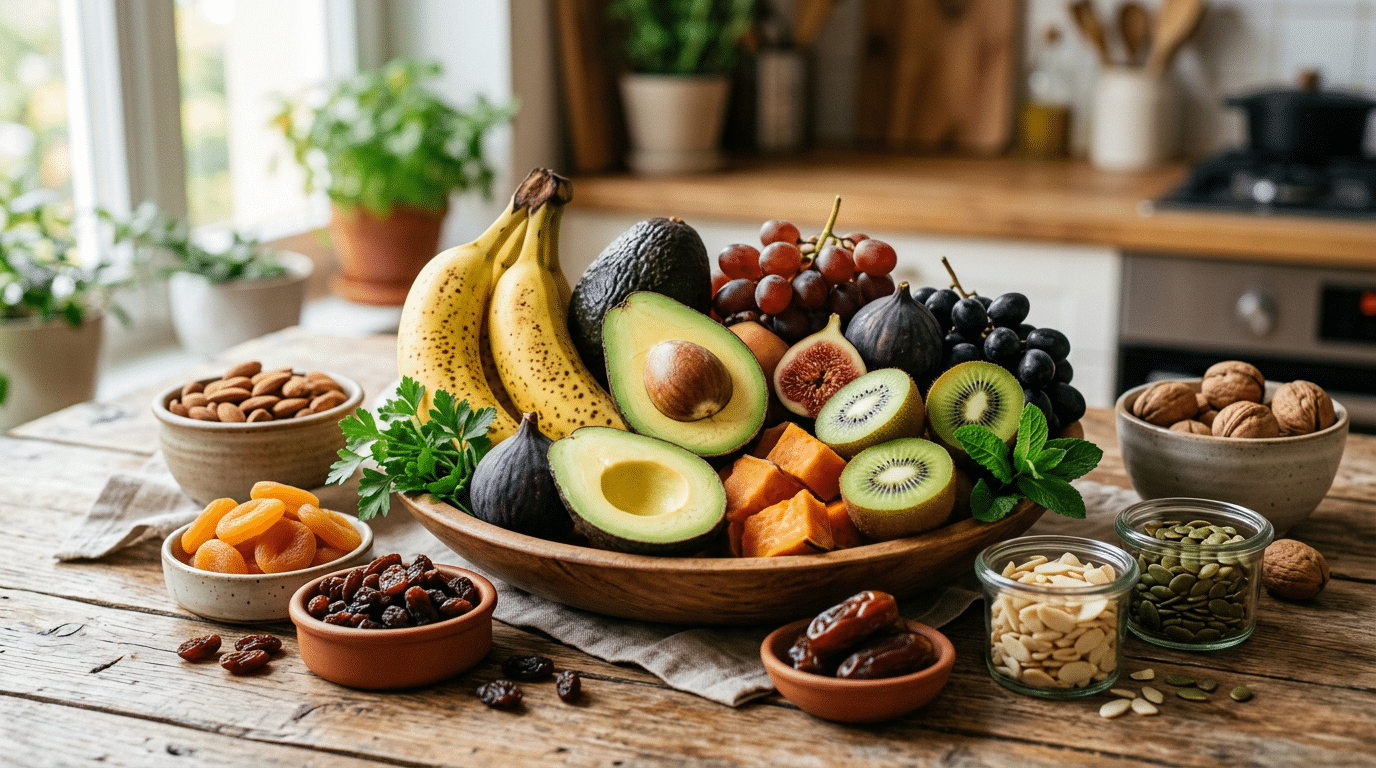
Fruits represent one of the most accessible and enjoyable ways to increase potassium intake, and several varieties deliver a meaningful contribution toward daily targets. Bananas are perhaps the most well-known fruit associated with potassium — a medium banana (approximately 118 grams) contains around 422 mg of potassium according to USDA FoodData Central data. However, bananas are far from the only option, and in many cases other fruits provide more potassium per serving. Avocados, for instance, are a standout source: according to USDA data, 100 grams of avocado contains approximately 507 mg of potassium, compared with around 326 mg in the same amount of banana. Half a raw avocado provides roughly 470 mg of potassium, along with heart-healthy unsaturated fats, fiber, and vitamins C, E, and K.
Other fruits worth incorporating include oranges, which provide around 240 to 250 mg of potassium per medium fruit alongside a substantial dose of vitamin C, and dried apricots, which are particularly concentrated — providing approximately 1,100 mg of potassium per cup of dried fruit, according to verified nutrition data. Raisins similarly deliver around 1,361 mg per cup, making dried fruits a compact and potassium-dense choice when consumed in moderate portions. Cantaloupe provides roughly 430 mg per cup, and kiwi offers approximately 240 mg per fruit while also being high in antioxidants. The key dietary takeaway here is variety: no single fruit meets all potassium needs, but consuming a diverse range across the day contributes meaningfully to overall intake.
Leafy Greens and Vegetables High in Potassium
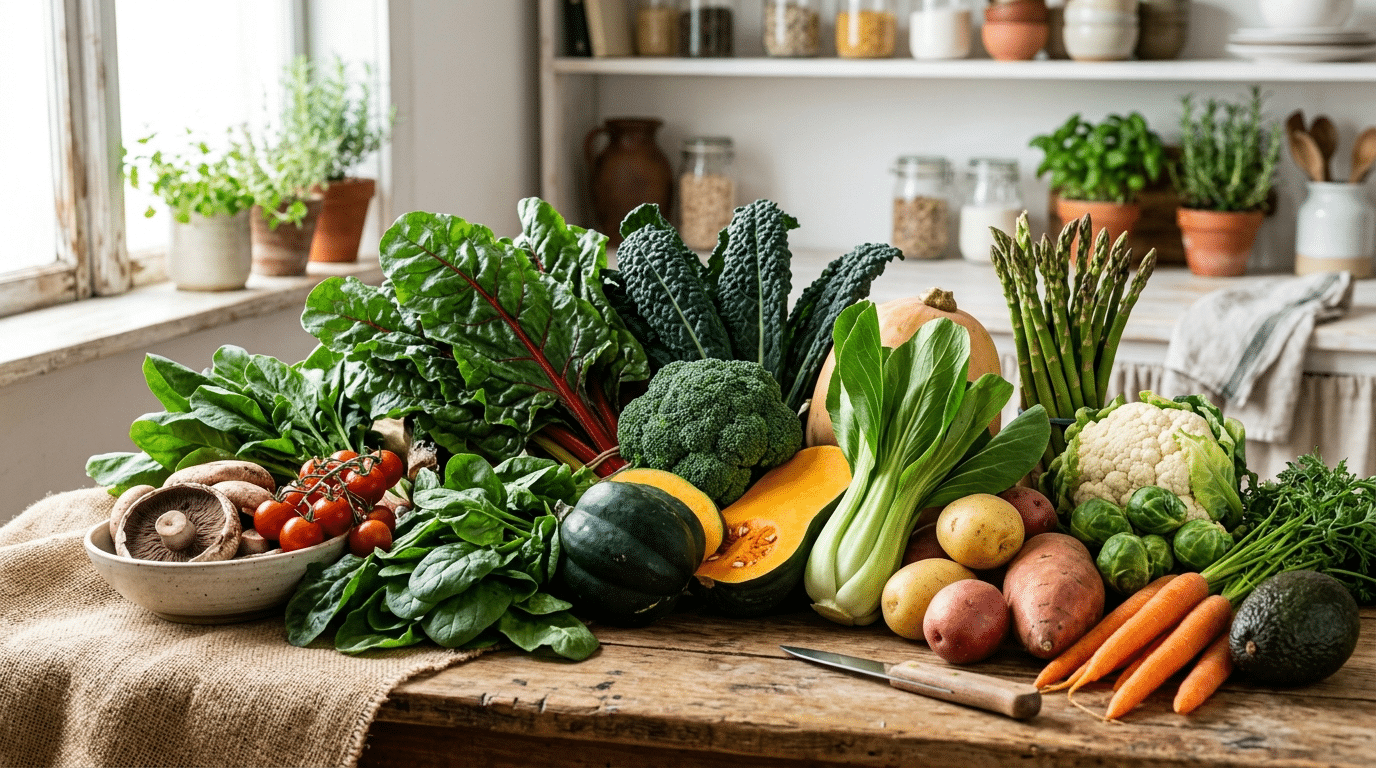
When it comes to potassium density per serving, vegetables — particularly leafy greens and tubers — are among the most reliable sources in any plant-based diet. Spinach stands out as a nutritional leader: raw spinach contains approximately 558 mg of potassium per 100 grams according to USDA FoodData Central, and because cooking reduces volume while concentrating nutrients, a half-cup of cooked spinach delivers roughly 430 mg. Swiss chard is similarly impressive: one cup of cooked Swiss chard contains approximately 961 mg of potassium, making it one of the most potassium-dense vegetables per serving available in the produce section.
Sweet potatoes are another cornerstone potassium food for vegans. According to USDA FoodData Central data, a medium sweet potato contains in the range of 440 to 708 mg of potassium depending on size and preparation. Beyond their potassium content, sweet potatoes are one of the richest food sources of beta-carotene, with a medium baked sweet potato providing over 100 percent of the daily vitamin A requirement. Regular potatoes also deserve mention: a large potato (approximately 10.5 ounces) provides just over 1,000 mg of potassium, making white and yellow potatoes genuinely significant sources of this mineral despite often being overlooked in nutritional discussions. Other notable vegetable sources include acorn squash, Brussels sprouts — which contain around 500 to 550 mg per cooked cup — and tomatoes, which contribute approximately 250 to 300 mg per medium fruit.
Preparation method can affect how much potassium is retained in vegetables. Boiling can cause some potassium to leach into the cooking water, while baking, steaming, or consuming vegetables raw tends to preserve more of the mineral. For foods like sweet potatoes, USDA testing suggests potassium is relatively stable across most cooking methods. Where possible, using the cooking liquid (such as in soups or stews) can help recover some of the potassium that would otherwise be lost.
Legumes and Beans as Potassium Powerhouses
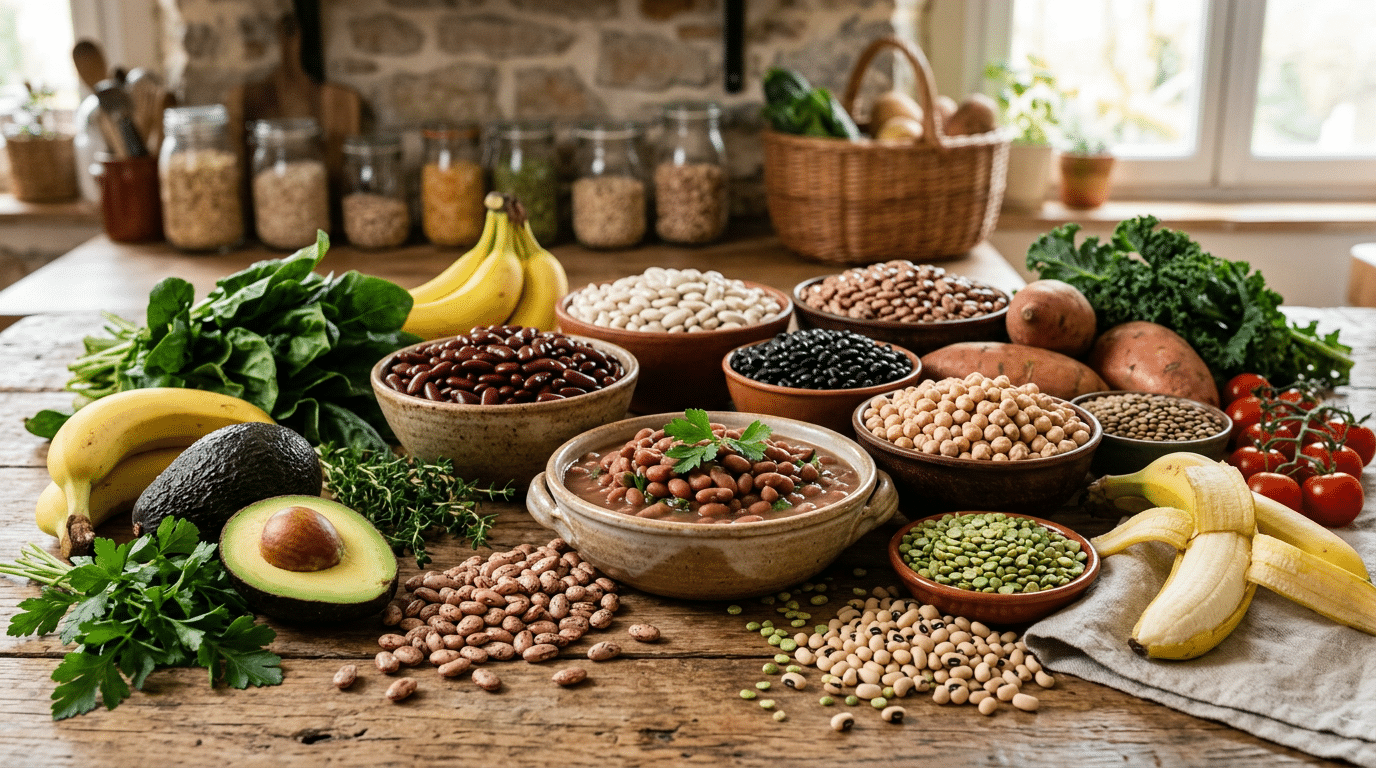
Among all plant-based food categories, legumes and beans offer some of the highest concentrations of potassium per serving, making them a particularly valuable inclusion in vegan meal planning. White beans are at the top of the list: according to data sourced from the USDA Nutrient Database, a one-cup serving of cooked white beans contains approximately 1,004 mg of potassium, with some sources citing figures as high as 1,189 mg per cup depending on the variety and preparation. This places white beans firmly among the most potassium-dense whole foods in the plant kingdom.
Cooked lentils are another excellent option. A cup of cooked lentils provides approximately 700 mg of potassium, alongside substantial amounts of fiber, protein, folate, and iron — making them one of the most nutrient-complete legumes available. Soybeans similarly stand out: one cup of cooked, boiled soybeans contains around 886 mg of potassium, according to verified nutrition data. Cooked lentils and chickpeas together provide approximately 730 to 750 mg of potassium per cup. It is worth noting that canned beans can be a convenient and still nutritious alternative — rinsing canned beans before use helps reduce added sodium while preserving the potassium content. Legumes are also counted by the U.S. Dietary Guidelines as both a vegetable and a protein food, reflecting their broad nutritional contribution to a plant-based diet.
Whole Grains and Their Contribution to Potassium Intake
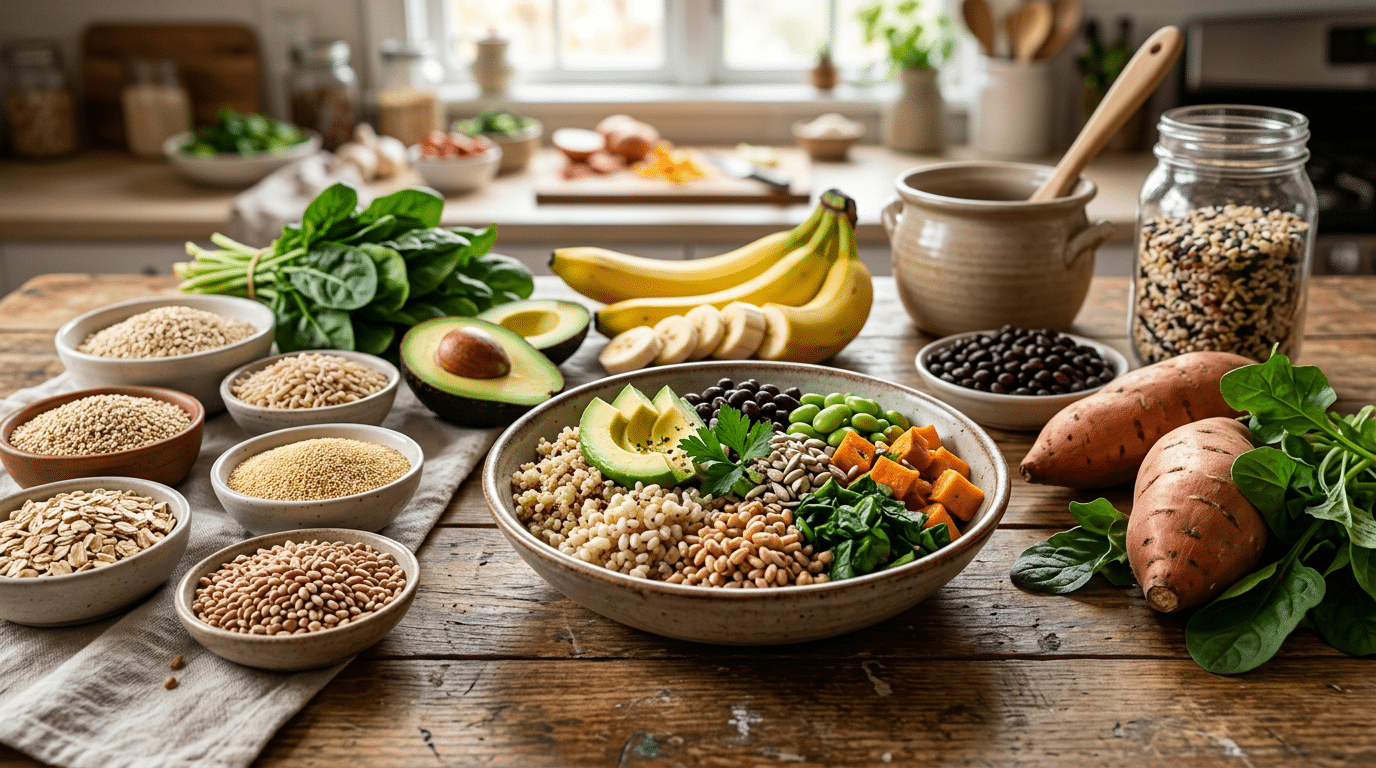
Whole grains occupy a supporting but meaningful role in building a potassium-rich vegan diet. Quinoa, while not classified as high in potassium in the same category as legumes or leafy greens, does contribute a modest and consistent amount: a quarter-cup of uncooked quinoa contains approximately 239 mg of potassium according to USDA data, and as a complete protein that is also naturally gluten-free, it brings a range of nutritional benefits beyond this mineral alone. Wheat germ is considerably more concentrated, with one cup containing approximately 1,026 mg of potassium, making it one of the higher-potassium grain-derived foods available. Whole grains more broadly provide dietary fiber that promotes digestive health, supports blood sugar regulation, and contributes to a sustained feeling of fullness — all characteristics that complement the goals of a balanced vegan eating pattern.
It is worth acknowledging that whole grains contain phytates — naturally occurring compounds that can reduce the body’s absorption of certain minerals, including potassium, to varying degrees. This is one reason why dietitians generally recommend consuming a wide variety of potassium-rich foods across multiple food categories rather than relying on any single source. Diversifying between grains, legumes, fruits, and vegetables helps ensure that the body absorbs adequate amounts of potassium and other key minerals throughout the day.
Nuts and Seeds Rich in Potassium
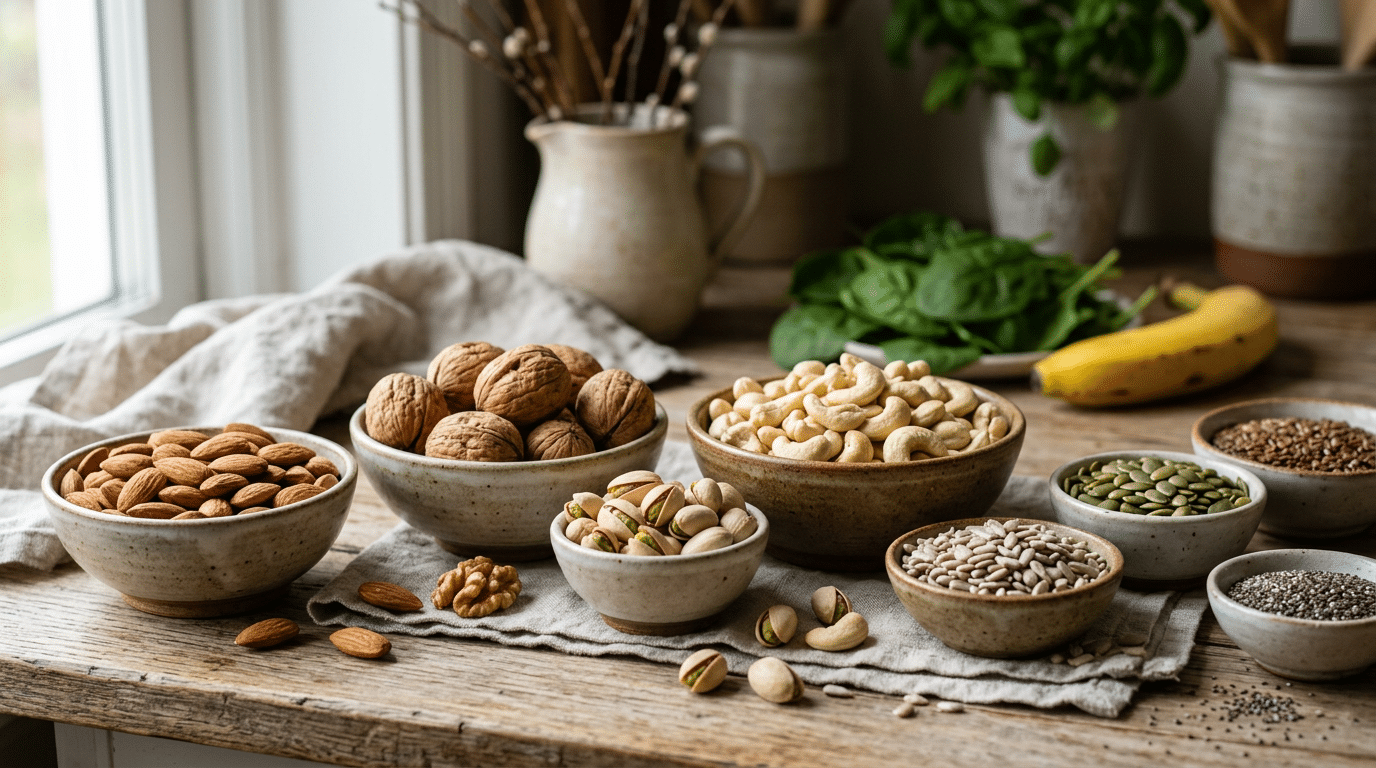
Nuts and seeds offer a calorie-dense but nutrient-rich way to add potassium to a vegan diet, particularly as snacks or toppings. Among the highest-potassium options are hemp seeds, which contain approximately 1,920 mg of potassium per cup according to USDA-sourced data — though this is an unusually large serving for hemp seeds in practice. Per realistic portion, pistachios are among the more potassium-significant nut options, with one cup providing approximately 1,239 mg of potassium. Pumpkin seeds deliver around 588 mg per cup, while almonds contribute approximately 200 mg per ounce and are simultaneously a good source of fiber, healthy fats, and vitamin E. Sunflower seeds and hazelnuts also rank among the higher-potassium options within this food category.
Because nuts and seeds are calorie-dense due to their fat content, they are best consumed in moderate portions — a small handful per day is a practical approach for most people. Their versatility makes them easy to incorporate into a variety of dishes: sprinkled over salads or oatmeal, blended into nut butters, stirred into soups, or eaten as a standalone snack. The combination of potassium, protein, fiber, and healthy fats that nuts and seeds provide makes them a well-rounded addition to any plant-based eating plan, even if they are not the primary potassium driver in the overall diet.
Other Vegan Foods That Support Potassium Intake
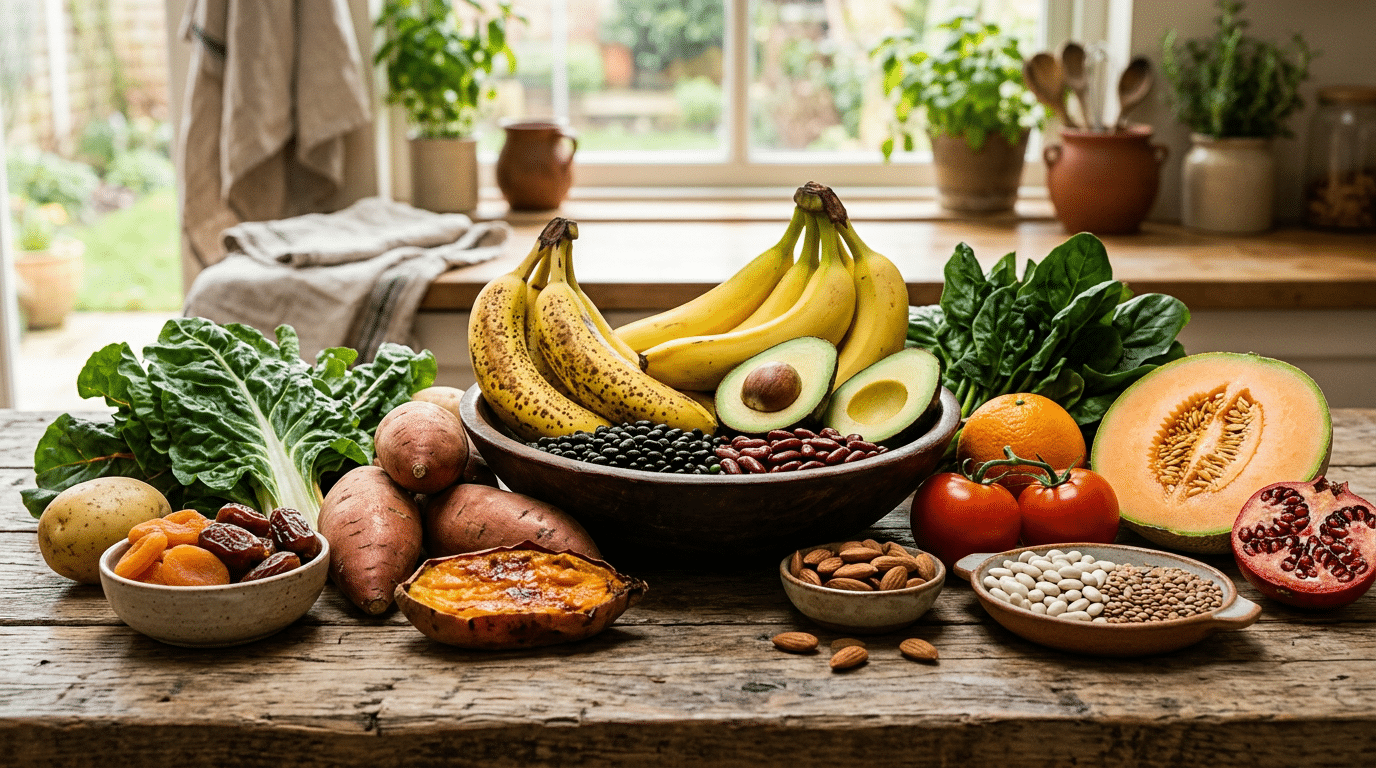
Beyond the categories already discussed, several other plant-based foods can meaningfully contribute to daily potassium intake. Dried fruits are notably concentrated: dried apricots provide approximately 1,510 mg of potassium per half-cup according to verified nutrition data, and raisins similarly provide over 1,300 mg per cup. Flaxseeds contain around 1,366 mg of potassium per cup, making them another dense option when used in smoothies or baked goods, though again realistic portions are more modest than a full cup. Tofu, a staple in many vegan diets, provides a more modest but still relevant contribution of potassium per serving, and its neutral flavor makes it easy to pair with higher-potassium vegetables and sauces in the same meal. Fortified plant-based milks — including soy milk and almond milk — may also provide varying amounts of potassium depending on the brand and whether the product is fortified; checking the nutrition label is the most reliable way to assess this for a specific product.
Tomato-based products such as tomato sauce and tomato paste are also recognized by the USDA Dietary Guidelines as notable potassium sources and can be incorporated easily into pasta dishes, soups, and stews. The broader principle that emerges across all of these categories is consistent with the guidance from the U.S. Dietary Guidelines and the NIH: the most effective strategy for meeting potassium needs is to eat a varied diet rich in whole plant foods each day, rather than relying on supplementation or any single food source.
The NIH Adequate Intake for potassium is 3,400 mg/day for adult males and 2,600 mg/day for adult females (ages 19+), though most Americans consume less than these targets.
Legumes such as white beans (~1,004 mg/cup) and soybeans (~886 mg/cup) are among the highest-potassium vegan foods by serving, according to USDA data.
Cooked Swiss chard (~961 mg/cup) and cooked spinach (~430 mg per half-cup) are standout leafy green sources of potassium.
Avocados contain more potassium per 100 grams than bananas, according to USDA FoodData Central records.
Dried fruits, nuts, and seeds can supplement potassium intake but should be consumed in portion-appropriate amounts due to calorie density.
Potassium is identified by the 2020–2025 U.S. Dietary Guidelines as a nutrient of public health concern due to consistent underconsumption across the population.
Building a Potassium-Rich Vegan Plate Every Day
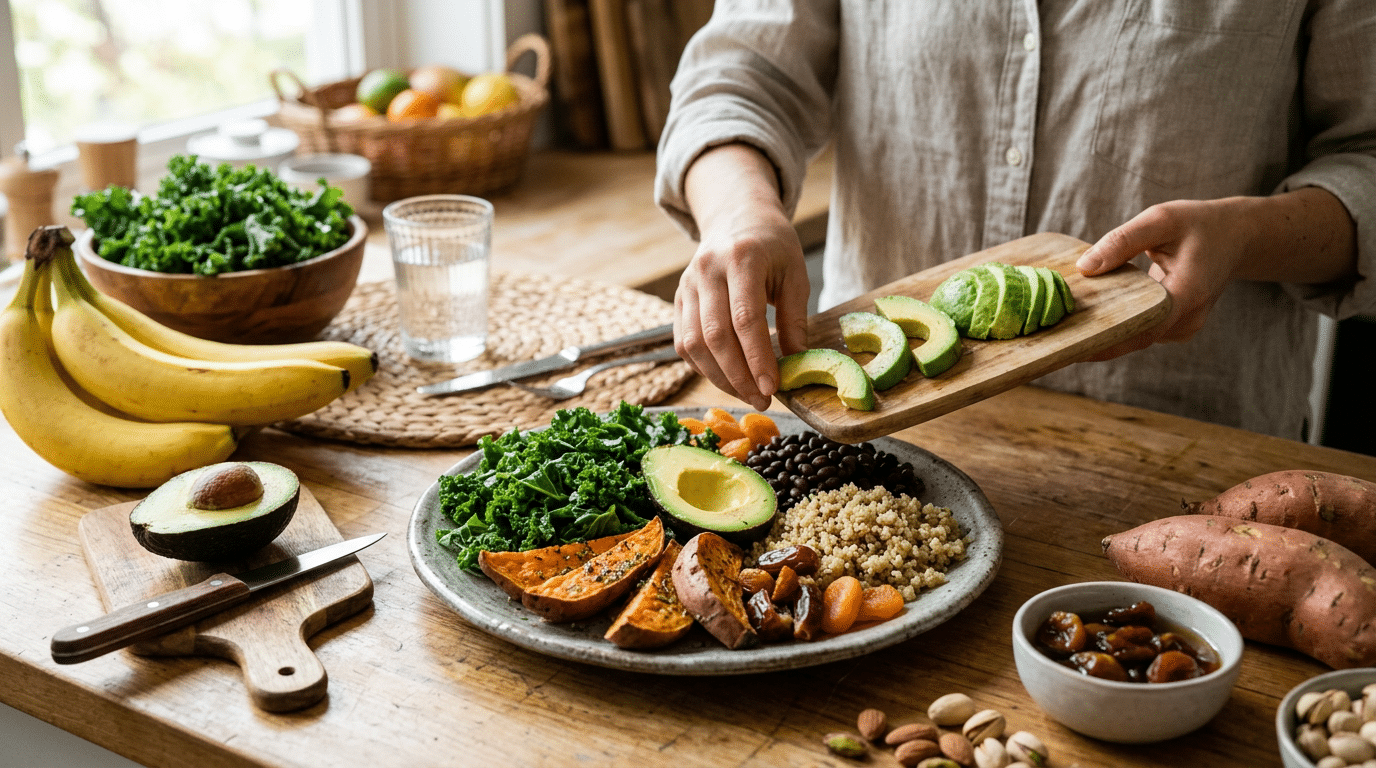
The landscape of potassium-rich vegan foods is far broader and more varied than is commonly assumed — encompassing not just the famous banana, but white beans and lentils, Swiss chard and spinach, avocados and dried apricots, pistachios and hemp seeds, and a host of other whole plant foods that the USDA and NIH consistently recognize as meaningful contributors to daily mineral intake. For those following a vegan diet, this variety is genuinely an advantage: the consistent emphasis on whole fruits, vegetables, legumes, and grains in plant-based eating aligns naturally with the dietary pattern most associated with adequate potassium consumption. Meeting daily targets does not require supplementation or dramatic dietary overhauls — it requires, as the evidence consistently shows, a diet built around diverse, minimally processed plant foods consumed with regularity and intention.